
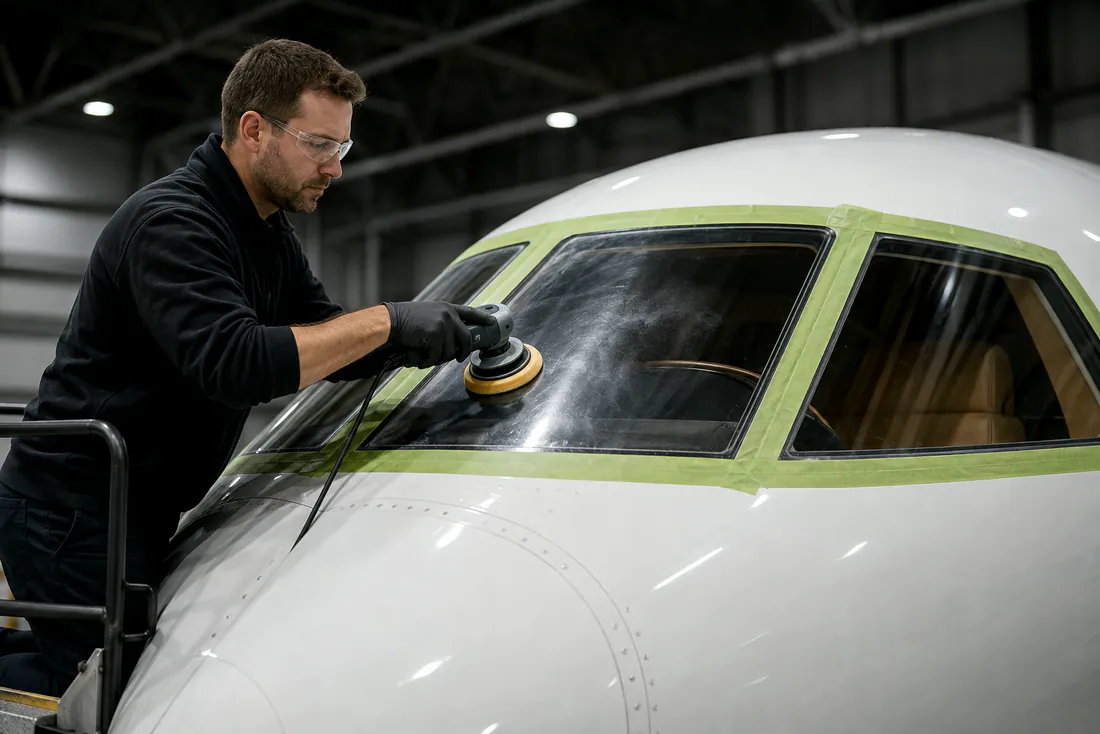
Window restoration
Window restoration
& polishing.
Fine scratch and haze reduction on cabin and cockpit acrylic — inside and out — worked strictly within the limits the window manufacturer allows.
01Overview
Clarity changes
the whole cabin.
Hazed cabin windows make a well-kept interior look tired, and they are one of the first things a buyer's eye lands on. They are also one of the most tightly constrained surfaces on the aircraft.
Aircraft acrylic accumulates fine scratching from cleaning as much as from flying — dry-wiping, the wrong cloth, and grit dragged across the surface all leave a haze that scatters light. Left alone it deepens; treated badly it deepens faster.
The work itself is a careful, staged reduction: an appropriate opening stage matched to the depth actually present, then progressive refinement to optical clarity. It is slow, and doing it quickly is exactly how a window ends up with distortion.
The constraint that matters is the manufacturer's material-removal limit. Windows are certified components with defined tolerances, and appearance work has to stay well inside them. Anything approaching a limit — crazing, deep scratching, delamination, any structural concern — stops and goes to your maintenance provider.
02Method
How the work is run.
- 01
Inspect under raking light
Depth, distribution and type of damage are assessed with proper lighting. Crazing and delamination are identified and excluded from the scope immediately.
- 02
Confirm the limits
The applicable material-removal tolerance is confirmed for the window type before any work is proposed, not after it starts.
- 03
Mask the surround
Frames, seals, paint and adjacent surfaces are protected so compound and heat stay where they belong.
- 04
Stage the reduction
An opening stage matched to actual depth, then progressive refinement, with heat and pressure kept controlled throughout.
- 05
Bring to optical clarity
Final refinement to remove haze and restore clear transmission without distortion.
- 06
Detail the frame and reveal
Frames, shades, reveals and cabin-side surrounds finished, so the window sits in a clean opening rather than a dirty one.
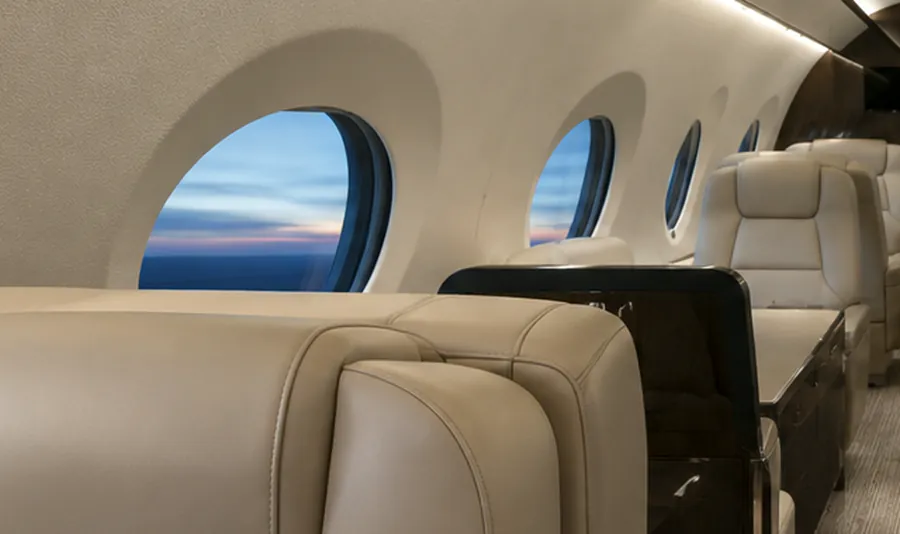
Cabin-side clarity
Passengers spend the flight looking through the inner pane. Interior-side haze and the condition of the reveal and shade have more effect on how the cabin feels than almost anything else at that scale.
- Interior acrylic clarity work
- Reveals, shades and surrounds detailed
- Frame and seal edges cleaned carefully
- Included in full interior scopes on request
Where we stop, every time
Crazing is not a polishing problem. Neither is delamination, a scratch approaching a depth limit, or anything involving the seal or the frame structure. Those go to maintenance the moment they are identified.
- Crazing and delamination excluded from scope
- Manufacturer removal limits treated as hard limits
- Seal, frame and structural concerns referred immediately
- Findings documented and passed to your provider
Where we stop
Certified components, cosmetic work only.
Windows carry defined tolerances for a reason. Appearance work stays well inside them, and anything else becomes a maintenance conversation immediately.
- Manufacturer material-removal limits are never approached, let alone exceeded
- No crazing repair, delamination work or seal disturbance
- No window removal, refitting or replacement
- Any window near a serviceability limit is reported and left alone
05Questions
Before you book.
Only if reducing it stays comfortably inside the manufacturer's removal tolerance. If it does not, we will tell you that directly rather than take material off a certified component to improve an appearance.
Crazing is a condition within the material, not a surface defect, and polishing does not address it. We identify it, document it and refer it to your maintenance provider.
Exterior surfaces by arrangement and within the same limits. Windshields carry additional considerations — heating elements, structural function, specific tolerances — and we confirm what is permissible with your provider before proceeding.
Cabin-side clarity work can be added to any interior scope. Full restoration is quoted separately because the time involved varies enormously with the condition of the acrylic.
Related capabilities.
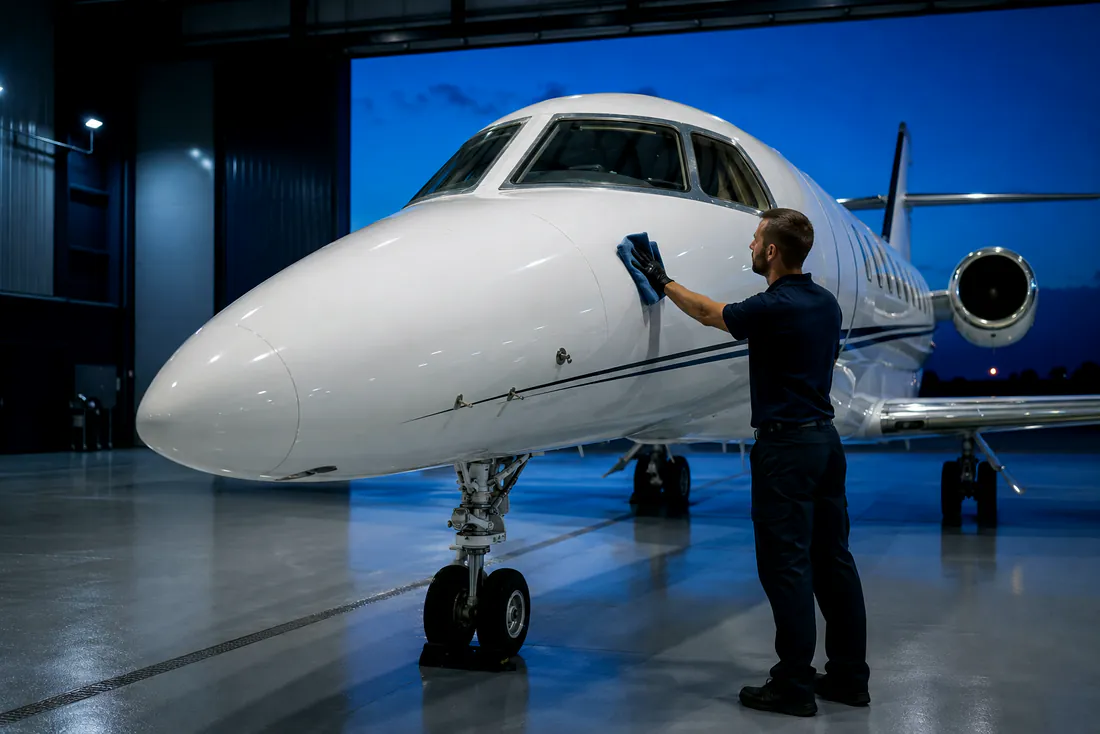
01
Exterior detailing
Controlled, low-moisture exterior cleaning that respects seals, static ports, composites and placards.
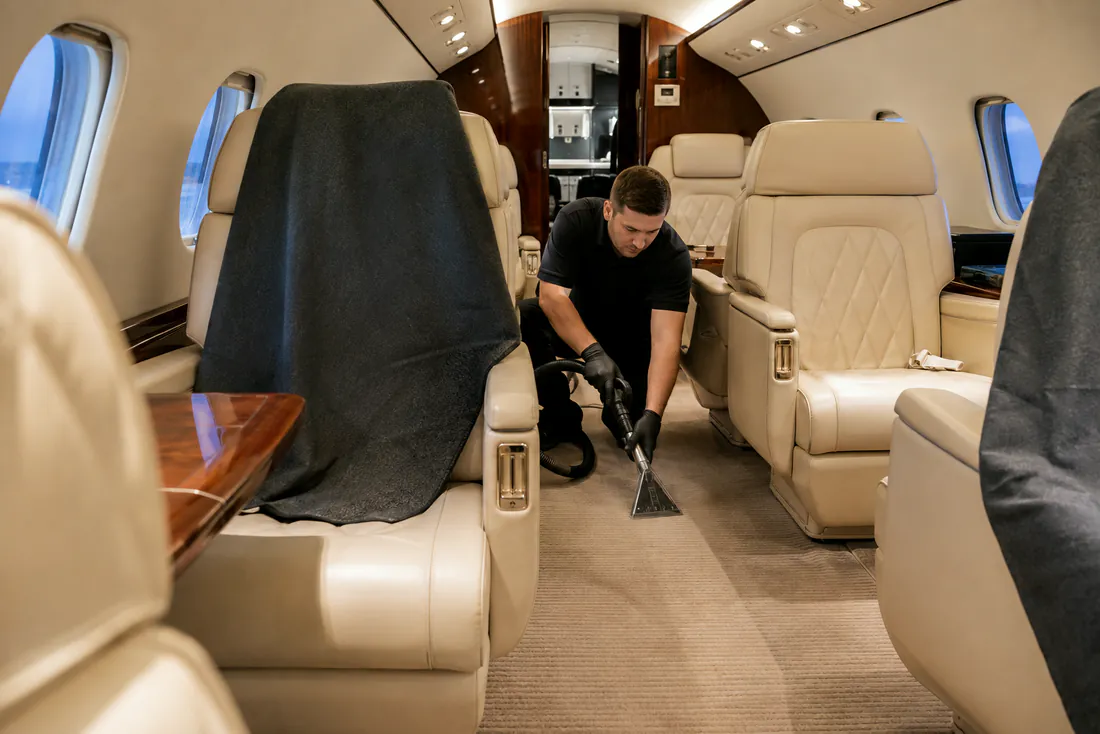
02
Interior detailing
A full cabin reset — seating, carpet, galley, lavatory and every high-touch surface in between.
03
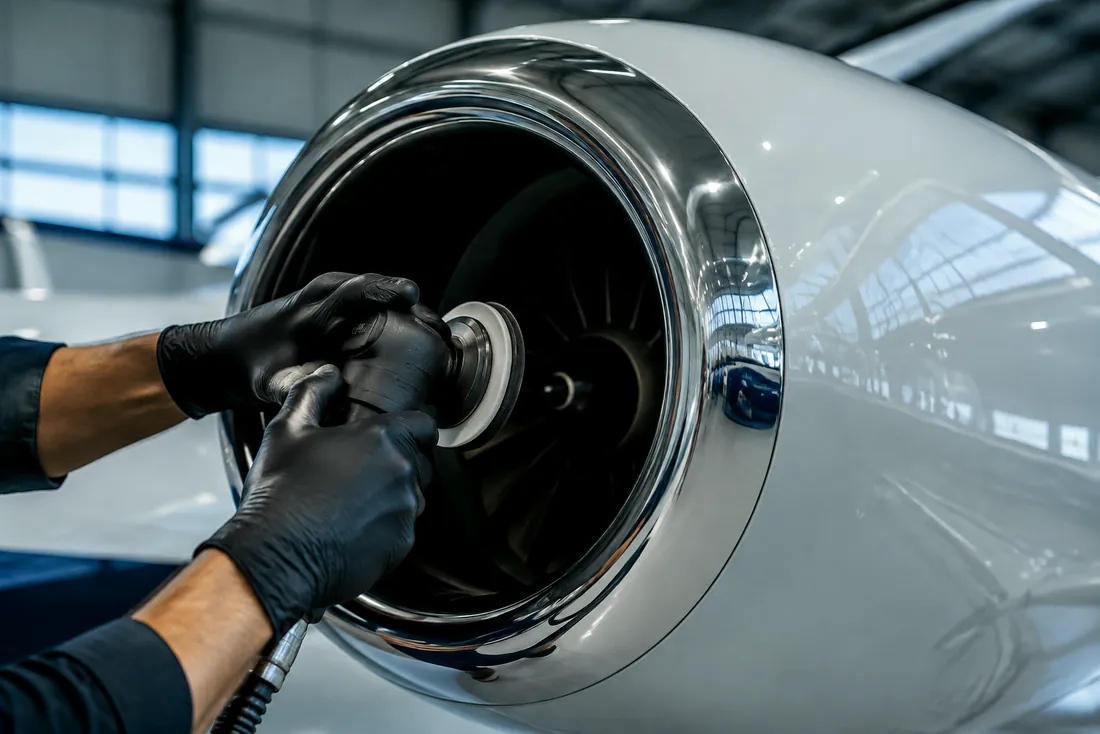
Brightwork & metal polishing
Staged oxidation correction on leading edges, inlet lips and nacelle rings.
Next step
Ready to scope this aircraft?
Send the tail type, the field and the ground time you hold. We will come back with what is realistic and what it involves.