Exterior detailing
Exterior detailing
& eco dry-wash.
A controlled, low-moisture exterior program that lifts soiling and exhaust film without flooding seals, sensors or bays — and leaves the aircraft looking like the asset it is.
01Overview
Cleaning is the method,
not the product.
Most exterior damage on an aircraft does not come from dirt. It comes from how the dirt was removed — too much water, the wrong chemistry, or the same towel used across the whole airframe.
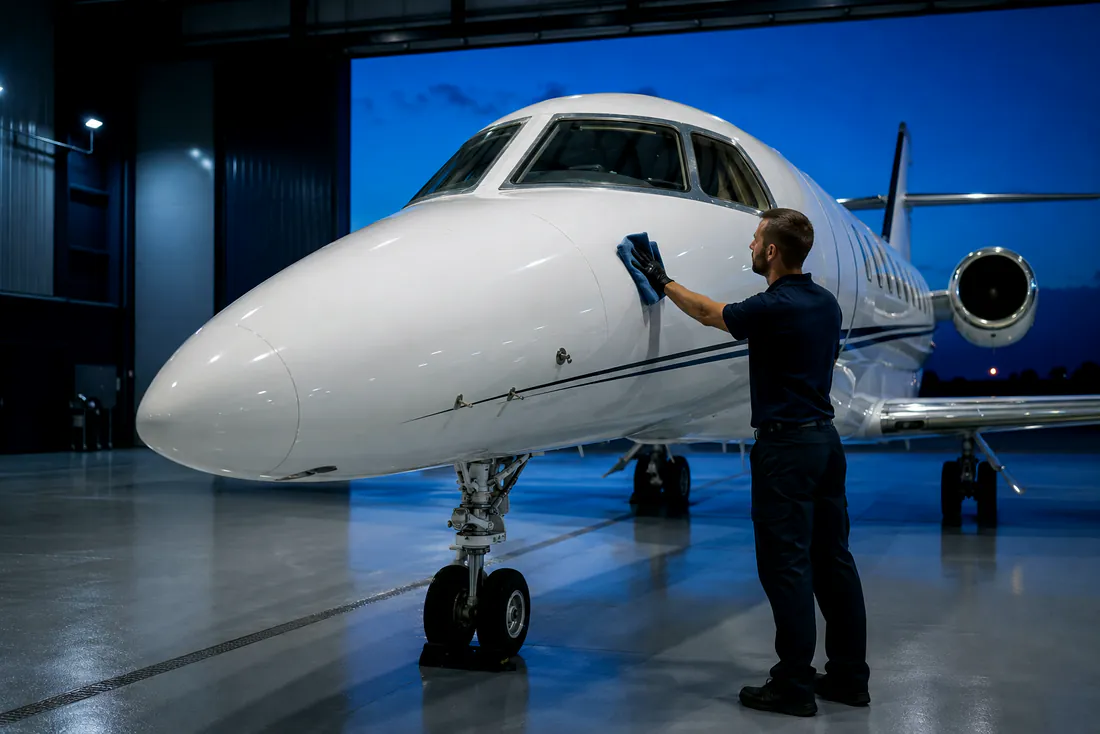
Our exterior program is built around low-moisture technique. Surfaces are worked in sections with clean media, so soiling is lifted and encapsulated rather than dragged across the paint. Water use stays controlled, which matters on a ramp with drainage restrictions and matters even more around seals, drains, bays and antennas.
Before anything is touched, the aircraft is walked and read: probes, static ports, vents, pitot covers, antennas, composite panels, polished metal and any existing paint defects are identified and protected or noted. Where a surface needs more than cleaning, we say so rather than trying to solve it with pressure.
The result is a consistent finish across the whole airframe — including the areas that quietly make an aircraft look tired: the belly, the aft fuselage behind the exhaust, the gear legs, the flap tracks and the wing walk.
02Method
How the work is run.
- 01
Walk & read the airframe
A full walkaround before contact: paint condition, polished metal, composites, existing defects, and every port, probe and drain that needs protecting or avoiding.
- 02
Protect & isolate
Sensitive areas are covered or masked. Polished sections, placards, decals and any known weak paint are identified so they are handled separately.
- 03
Work in sections
The airframe is cleaned in defined panels with clean media per section — top surfaces down, so nothing is re-soiled and nothing is dragged across a large area.
- 04
Detail the unglamorous parts
Belly film, exhaust staining, gear legs, tracks and the wing walk. This is the difference between a washed aircraft and a detailed one.
- 05
Dress & finish
Tyres, gear and trim dressed appropriately; brightwork handed to the polishing scope if it is part of the job.
- 06
Walkaround & handback
A structured review against the written scope, covers removed and accounted for, and a completion record with anything we noticed on the airframe.
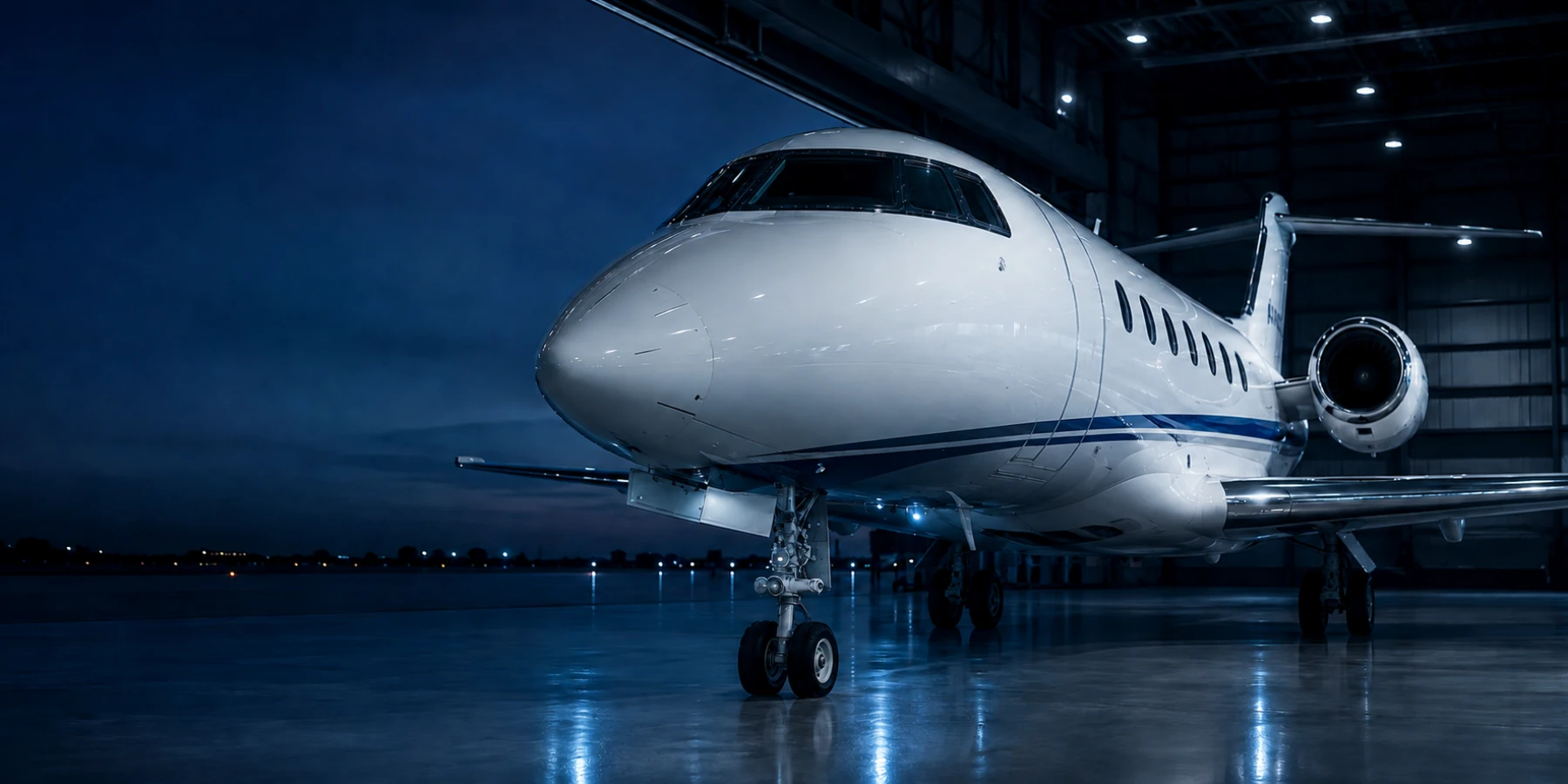
Belly, exhaust film and the aft fuselage
The underside carries most of an aircraft's visual age. Hydraulic mist, exhaust deposits and brake dust build into a film that a standard wash barely touches and that flat-out ruins a listing photograph taken from below.
- Dedicated belly pass with appropriate chemistry
- Exhaust staining worked back on the aft fuselage
- Gear legs, doors and wheel-well faces cleaned cosmetically
- Findings on leaks or damage reported, never disturbed
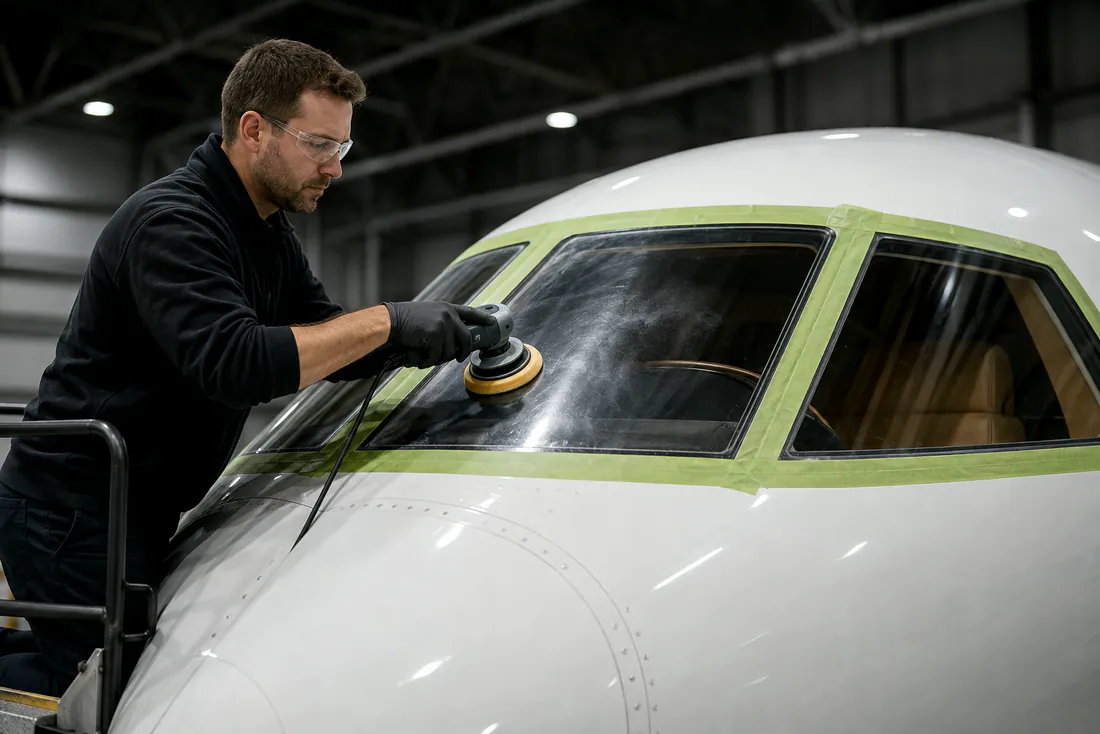
Around the things that must not get wet
Static ports, pitot probes, TAT probes, angle-of-attack vanes, drain masts, antennas and bonded seals all have specific tolerances for water and chemistry. We work to the aircraft's limits, not to a car-wash routine.
- Ports and probes identified and protected before contact
- Controlled moisture volumes throughout
- Seals, fairings and composite panels handled separately
- Covers logged on and logged off at handback
Where we stop
Appearance work, and nothing beyond it.
Exterior detailing sits alongside your maintenance program — never inside it. If something we find belongs to a mechanic, it goes to your mechanic.
- No panel removal, fastener work or component disturbance
- No cleaning inside bays or areas requiring maintenance access
- Corrosion, damage, leaks or lifted paint are reported, not treated
- Any doubt about a surface stops the work until it is resolved with you
05Questions
Before you book.
The exterior program is built to run with minimal water, which is what makes it workable on ramps and in hangars with drainage restrictions. Where a facility permits a conventional rinse and it is the better method for the aircraft's condition, we discuss it with you first.
Yes — belly work is part of the standard exterior scope and is performed with the aircraft on its gear. Anything that would require jacking or panel access is outside appearance work and goes to your maintenance provider.
No. Cleaning removes what is on the surface. Oxidation, marring and gloss loss are correction work — covered under paint revitalization and brightwork, and quoted separately after the paint film is assessed.
It depends entirely on the class of aircraft, its current condition and the access we have. We give you a realistic window for your specific aircraft when we confirm scope, rather than a headline number that does not survive contact with a real ramp.
Related capabilities.
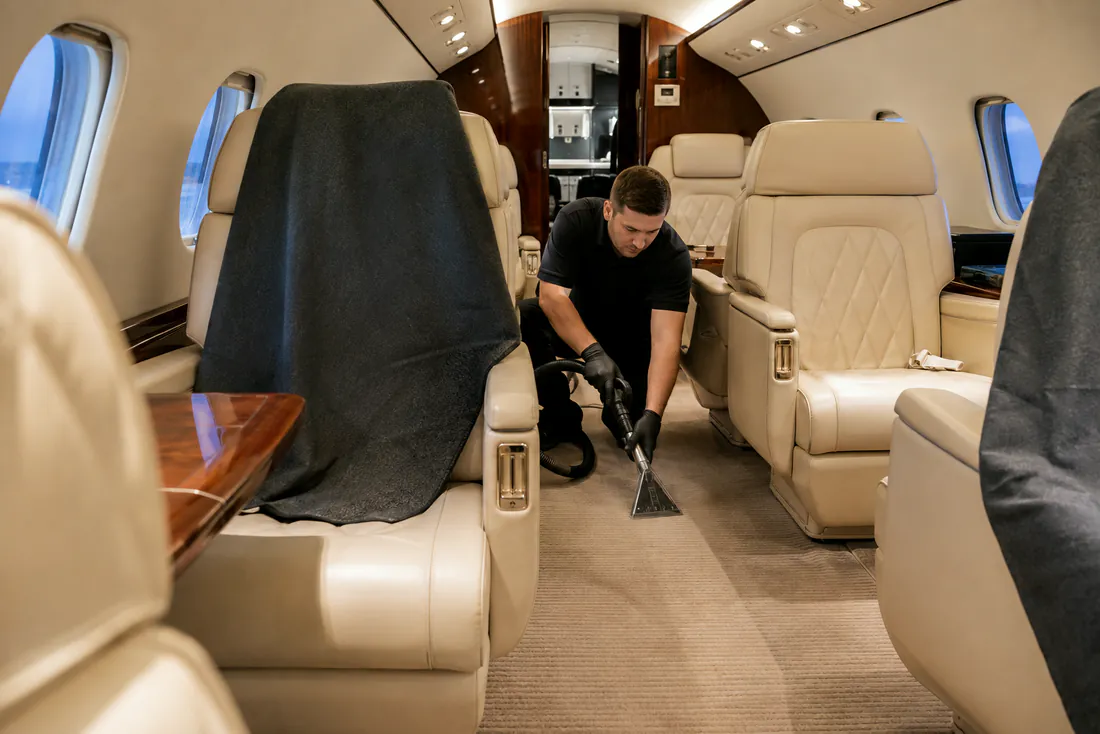
02
Interior detailing
A full cabin reset — seating, carpet, galley, lavatory and every high-touch surface in between.
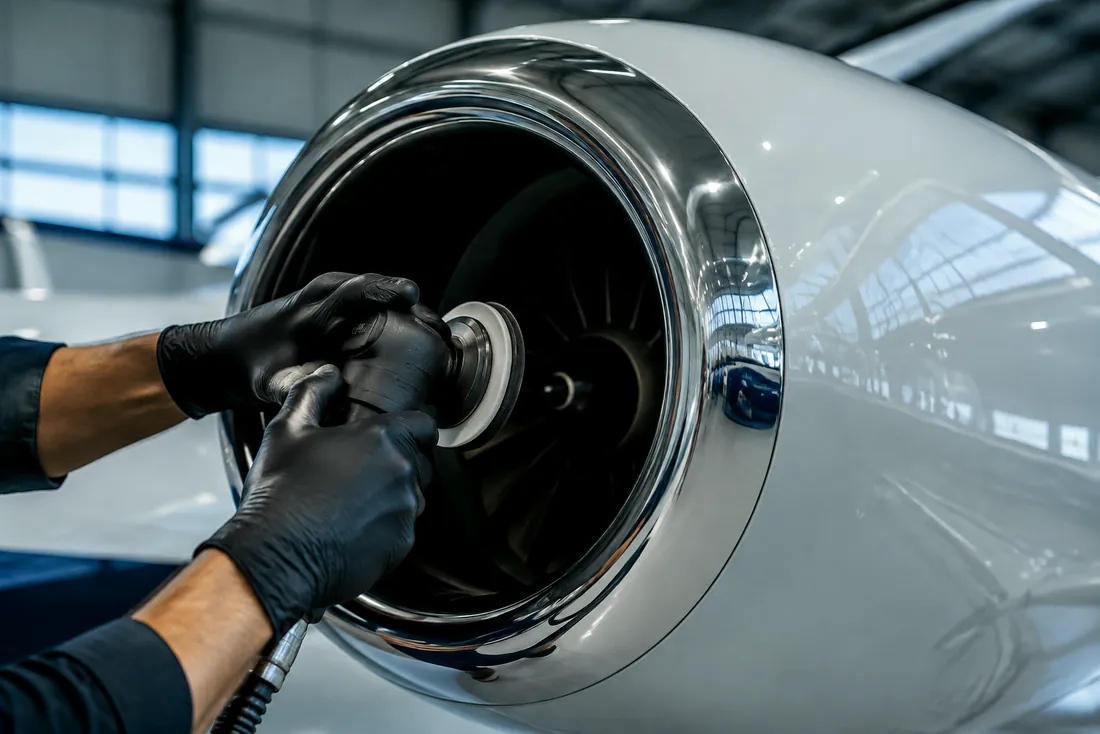
03
Brightwork & metal polishing
Staged oxidation correction on leading edges, inlet lips and nacelle rings.
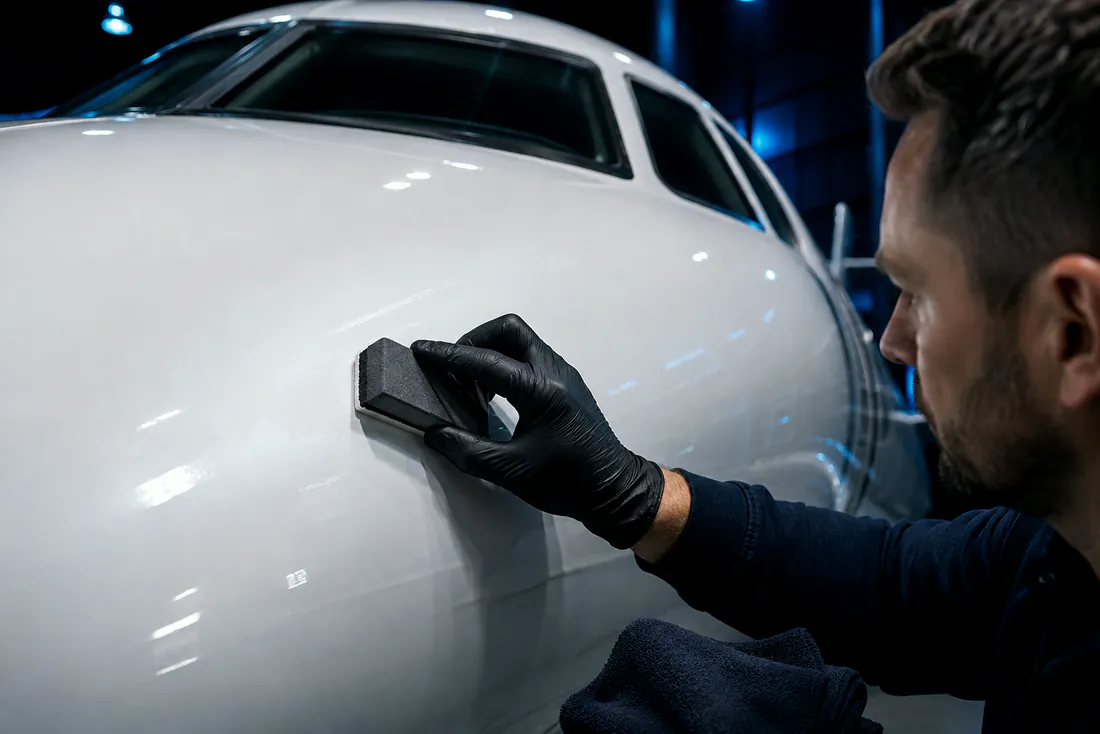
04
Paint revitalization & ceramic
Gloss recovery within the limits of the paint film, then durable protection to hold the result.
Next step
Ready to scope this aircraft?
Send the tail type, the field and the ground time you hold. We will come back with what is realistic and what it involves.