A business jet inside a hangar showing its full profile

Aircraft we serve

Turboprop through
large-cabin.

Every class changes the access, the surface area and the realistic service window. None of them change the method.

01Class selector

Select a class to see
what changes.

Use the selector to explore each airframe profile and the areas that dominate a scope for its class.

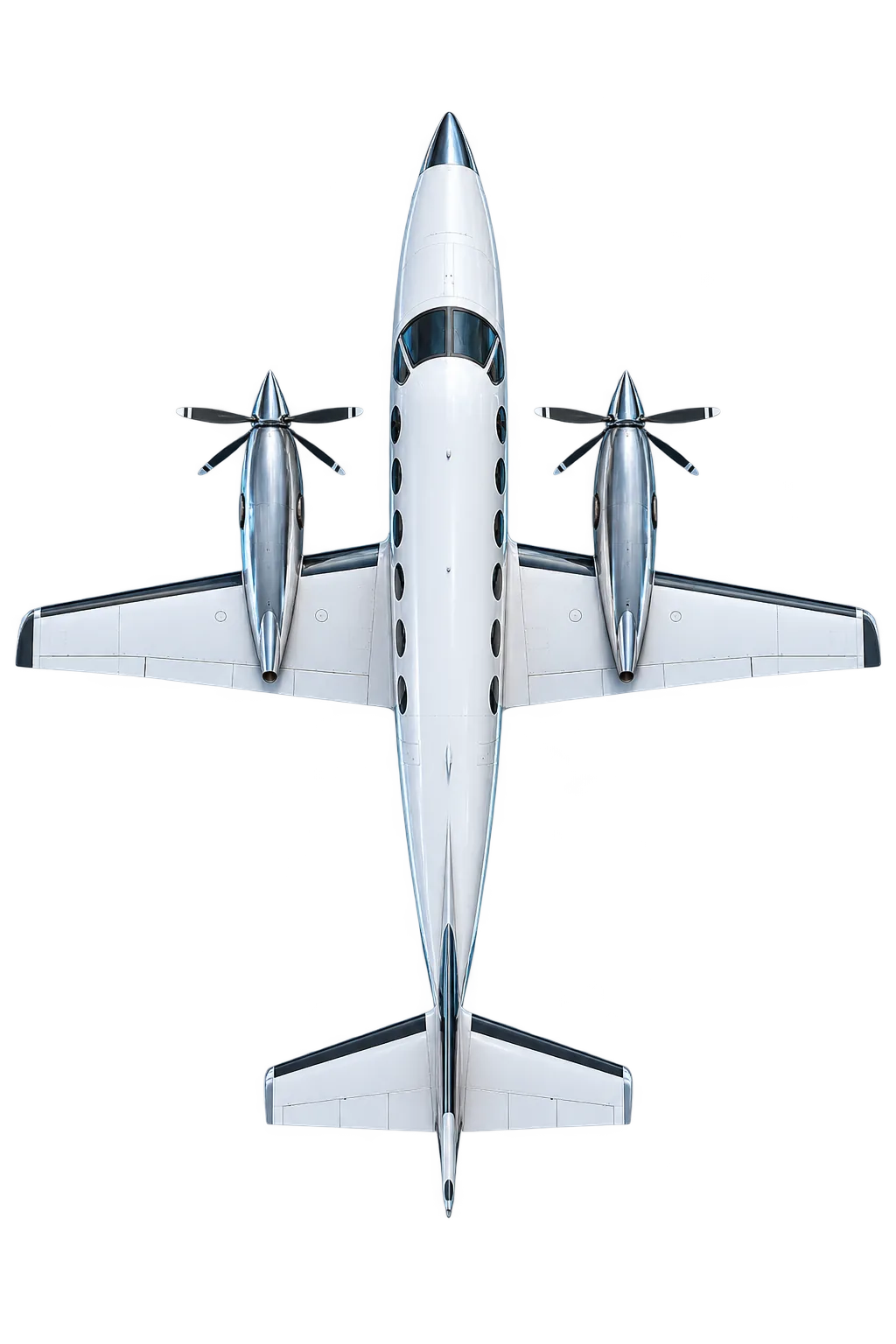
Overhead illustration of a generic twin-engine executive turboprop
Turboprops · illustrated profile

Drag to rotate · arrow keys when focused

Propeller aircraft bring their own surface problems: exhaust staining behind the nacelles, spinner and blade polish, and boot-heavy leading edges.

  • Exhaust and belly soiling on the aft fuselage
  • Leading-edge de-ice boot appearance
  • Spinner, blade and nacelle brightwork
  • Compact cabins with high-touch wear

Typical scopeExterior wash, boot dressing, brightwork, cabin reset

Care zones

Select paint, brightwork, windows, de-ice boots or cabin above to see how that area is approached on this class of aircraft.

Interactive 3D study models are original and generic — not a specific make, model, operator or livery. Scope, access and duration are always confirmed against the actual aircraft.

02In detail

Four classes,
four different jobs.

The same seven capabilities apply throughout. What changes is which of them dominate the scope and how the visit has to be planned.

Class 01

Turboprops

Single- and twin-engine turboprops

Propeller aircraft bring their own surface problems: exhaust staining behind the nacelles, spinner and blade polish, and boot-heavy leading edges.

  • Exhaust and belly soiling on the aft fuselage
  • Leading-edge de-ice boot appearance
  • Spinner, blade and nacelle brightwork
  • Compact cabins with high-touch wear

Typical scopeExterior wash, boot dressing, brightwork, cabin reset

Class 02

Light jets

Entry-level and light cabin jets

Short ground times and owner-flown operations. The work is planned tightly so the aircraft is back on the line without a lost trip.

  • Fast-cycle exterior presentation
  • Cockpit glass and cabin window clarity
  • Compact galley and refreshment center detail
  • Seat leather in a small, hard-worn cabin

Typical scopeExterior dry-wash, window work, full cabin detail

Class 03

Midsize & super-midsize

Midsize through super-midsize cabins

The corridor's most common class. Enough cabin to justify a staged interior scope, and enough surface area for real paint and brightwork work.

  • Full exterior correction and protection scopes
  • Divan, club seating and carpet as one interior program
  • Lavatory and galley presentation
  • Leading-edge brightwork over longer spans

Typical scopeStaged exterior correction, ceramic protection, full interior

Class 04

Large-cabin

Large-cabin and long-range aircraft

Multi-zone cabins, more crew involvement and more surface area. These aircraft usually run on a planned cadence rather than one-off visits.

  • Multi-day exterior programs in hangar
  • Zone-by-zone cabin scheduling around crew rest
  • Full galley, lavatory and crew-area detail
  • Recurring appearance care between trips

Typical scopePlanned exterior program, multi-zone interior, recurring cadence

What does not change

The method, on every airframe

A turboprop and a large-cabin jet get the same discipline: sensors identified and protected, correction staged from least aggressive, scope written down, walkaround before handback.

  • Aircraft-safe products and low-moisture technique
  • Probes, ports, seals and composites protected first
  • Correction staged and assessed between stages
  • Documented handback on every visit

What does change

Access, area and the window

Class drives the practical side of the visit far more than the technical side — where the work happens, how long it takes, and how many people are on it.

  • Surface area, and therefore realistic duration
  • Whether hangar space is required or merely preferred
  • How the cabin is zoned and scheduled around crew
  • Whether the work is a single visit or a planned program

03Questions

About aircraft classes.

Next step

Tell us the type and we will tell you the shape of the job.

Send the aircraft type and where it lives. We will come back with what a realistic scope and window look like for that airframe.