Brightwork & metal polishing
Brightwork &
metal polishing.
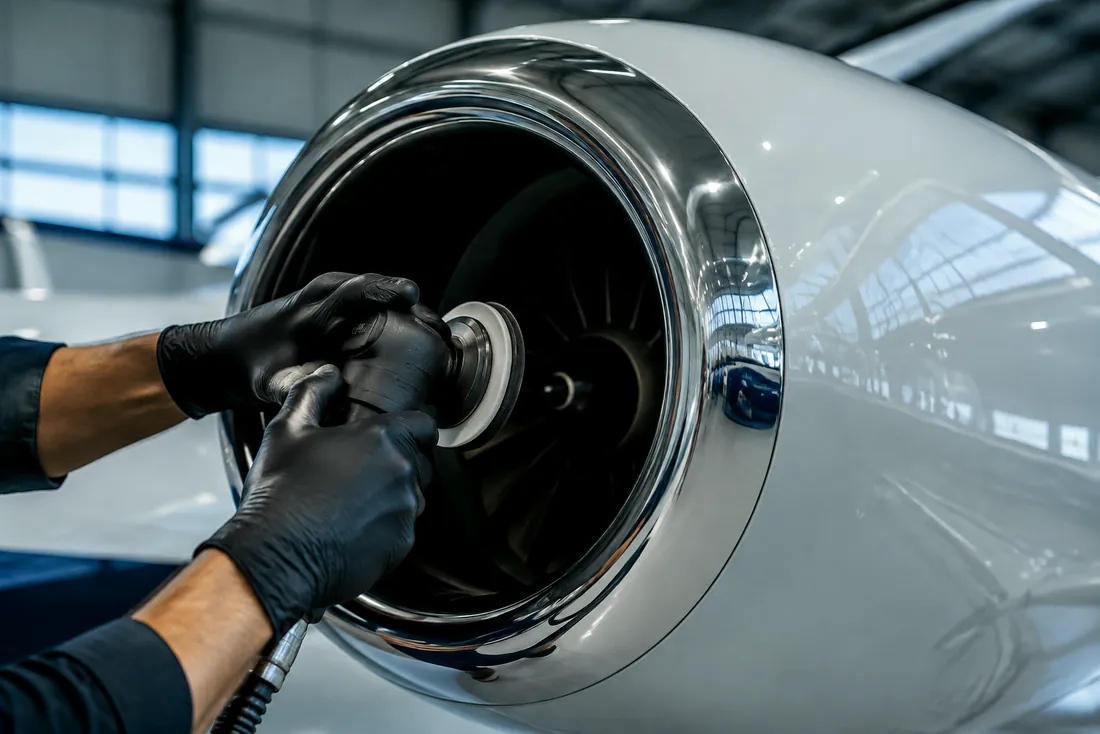
Staged oxidation correction on polished metal — leading edges, inlet lips, nacelle rings and trim — refined in steps so the surface is corrected, not consumed.
01Overview
Polished metal is
a consumable surface.
Every polish removes material. That is how polishing works. The discipline is in removing the minimum needed to correct the surface and no more.
Brightwork is the first thing an experienced eye checks and the fastest thing to give an aircraft away. Oxidation, water etching, tool marks and previous over-polishing all read immediately on a leading edge or an inlet lip.
We work in defined stages — a cut appropriate to the oxidation present, then progressive refinement, then a final finishing pass — with the surface assessed between each stage rather than after. That is what stops a job from going further than it needed to.
Adjacent paint, composite panels, placards and decals are masked before any compound or machine comes near them. Sling, spatter and pad drift onto paint are avoidable problems, and preventing them is part of the scope rather than a bonus.
02Method
How the work is run.
- 01
Assess the oxidation
The surface is read for oxidation depth, etching, previous polishing history and any coating already present. That determines the starting stage — not a default.
- 02
Mask everything adjacent
Paint, composite, placards, decals, seals and fasteners around the work area are protected before any compound is opened.
- 03
Cut only where needed
The opening stage is matched to what is actually present, and applied only to the areas that need it rather than uniformly across the panel.
- 04
Refine progressively
Successive stages with finer media, checking the surface under proper light between each, until the correction is complete.
- 05
Finish and protect
A final refinement pass, then a protective treatment appropriate to the metal and the operating environment, discussed with you first.
- 06
Record what was done
Areas worked, stages used and condition findings are recorded, so the next visit starts with a history rather than a guess.
Leading edges and inlet lips
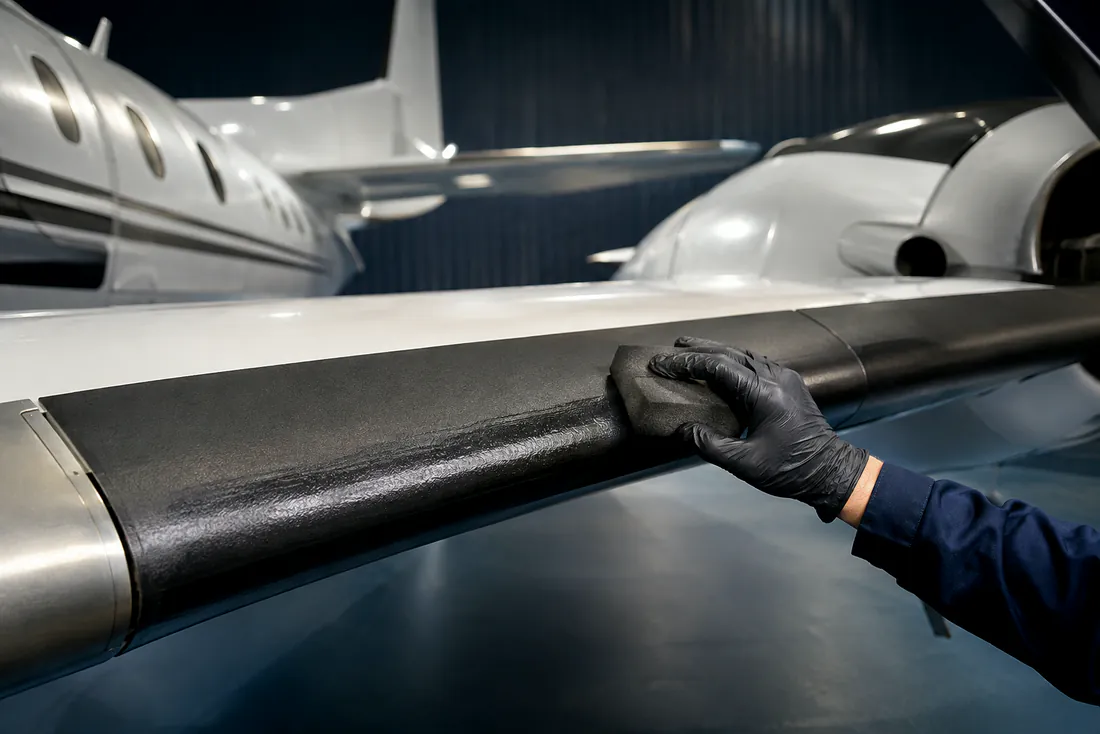
Leading edges take airborne abrasion continuously, and inlet lips add heat and turbulence to the same problem. They are also the areas most often over-polished by someone in a hurry.
- Oxidation depth assessed before a stage is chosen
- Work confined to the areas that need it
- Radius and edge detail preserved, not flattened
- Adjacent paint masked throughout
Correction, then protection
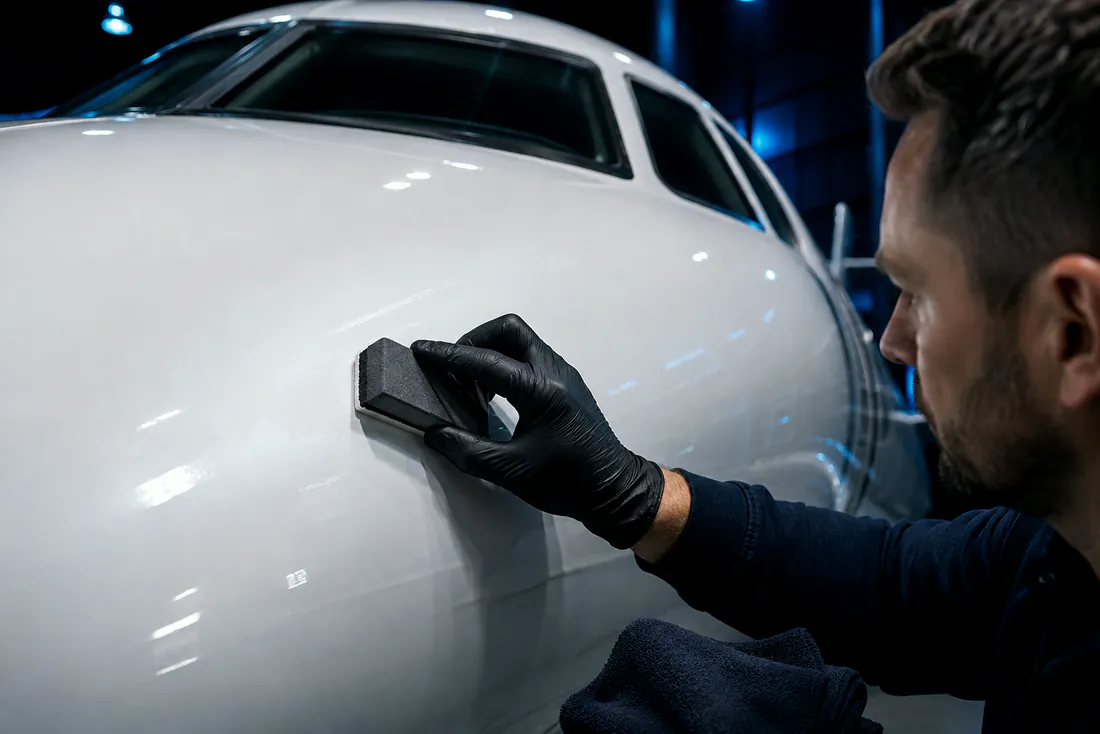
A polished surface with nothing on it starts oxidizing again immediately. Protection is what determines whether the result lasts a season or a fortnight — and which product is right depends on where the aircraft actually lives.
- Protection matched to the metal and the environment
- Options and trade-offs explained before selection
- Maintenance interval discussed honestly
- Recurring care available under PAC FleetReady
Where we stop
We polish surfaces. We do not touch structure.
Brightwork is cosmetic work on external polished surfaces. Anything structural, load-bearing or airworthiness-related belongs to your maintenance provider.
- No work on fasteners, structure or load-bearing components
- Corrosion beyond surface oxidation is reported and stopped, never polished over
- Cracks, damage or previous repairs are documented and referred
- Coated or anodized surfaces are identified and handled accordingly
05Questions
Before you book.
As rarely as the condition allows. Every polish removes material, so the right interval is the longest one that keeps the surface looking right — which is exactly why protection between visits matters more than frequency.
Sometimes the appearance can be improved. Material that has already been removed cannot be replaced, so we assess the surface, tell you what is realistically achievable, and do not promise a result the metal cannot give.
Paint correction is a separate discipline with different products, different machines and different limits. It is covered under paint revitalization and is frequently done in the same visit.
Boots are masked and protected during brightwork. Boot appearance itself is handled as a separate cosmetic scope, coordinated with your maintenance provider.
Related capabilities.
01
Exterior detailing
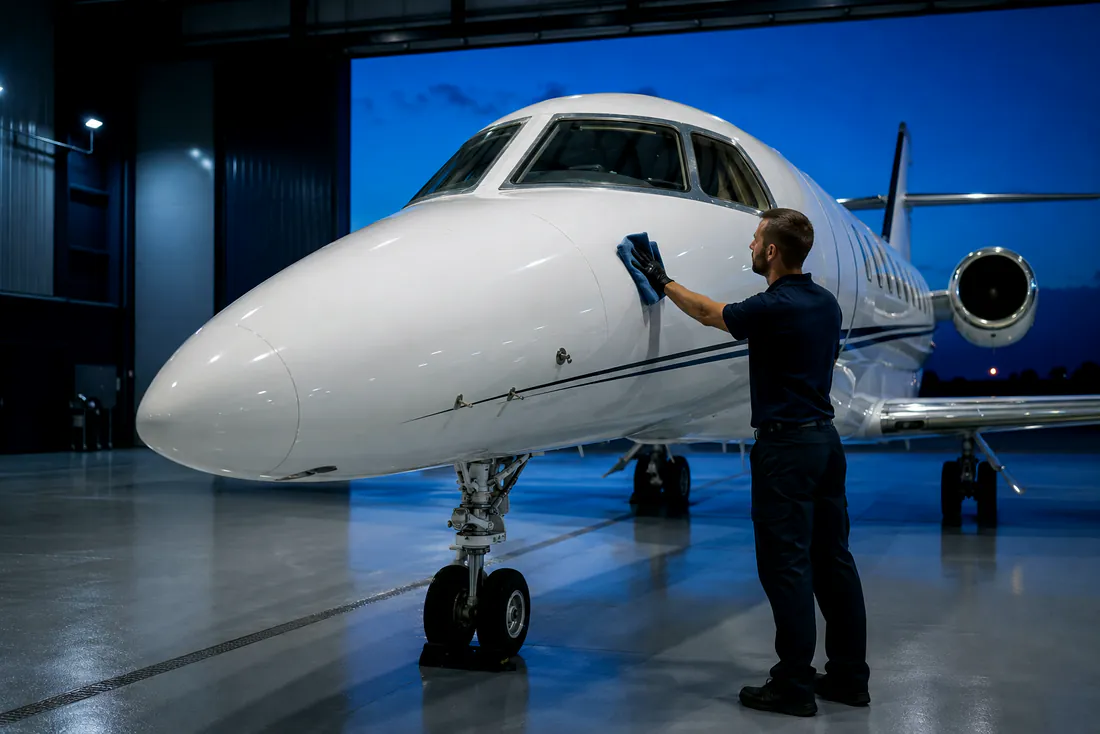
Controlled, low-moisture exterior cleaning that respects seals, static ports, composites and placards.
02
Interior detailing
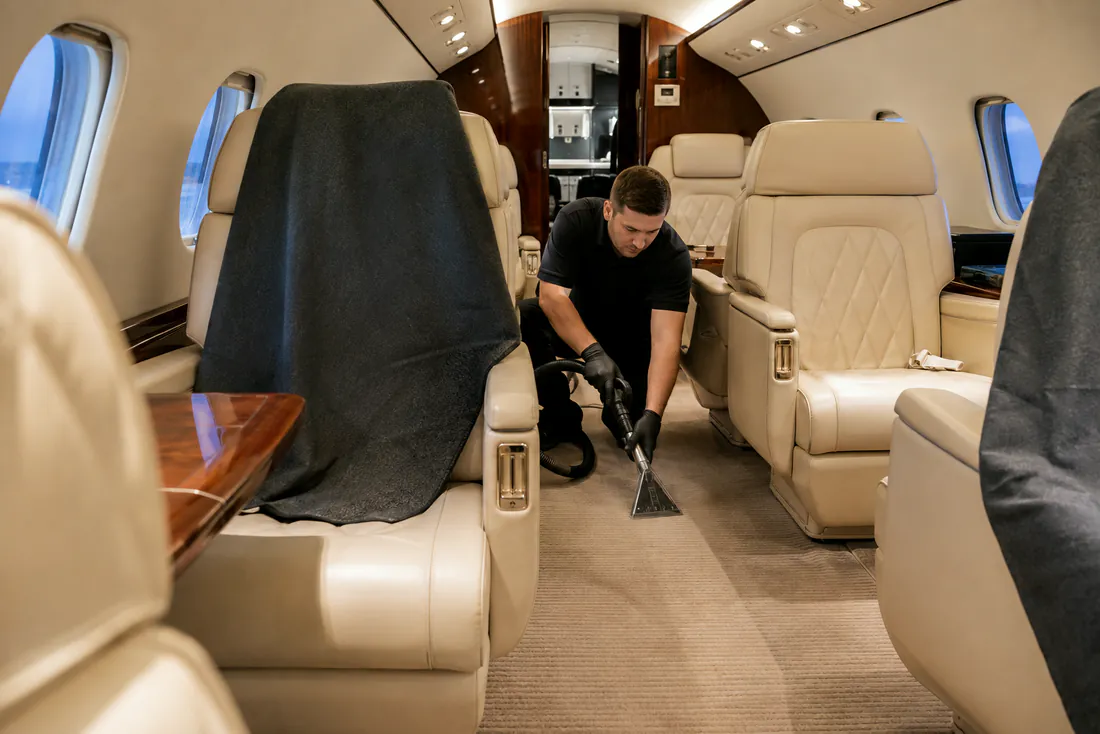
A full cabin reset — seating, carpet, galley, lavatory and every high-touch surface in between.
04
Paint revitalization & ceramic
Gloss recovery within the limits of the paint film, then durable protection to hold the result.
Next step
Ready to scope this aircraft?
Send the tail type, the field and the ground time you hold. We will come back with what is realistic and what it involves.