Interior detailing
Interior detailing
& cabin reset.
A full cabin reset — seating, soft trim, floor, galley, lavatory and every surface a passenger touches — returned to a standard the aircraft can be handed over in.
01Overview
The cabin is the part
they actually sit in.
Exterior work sells the aircraft from fifty feet. The cabin decides what someone thinks in the first ten seconds after they step through the door.
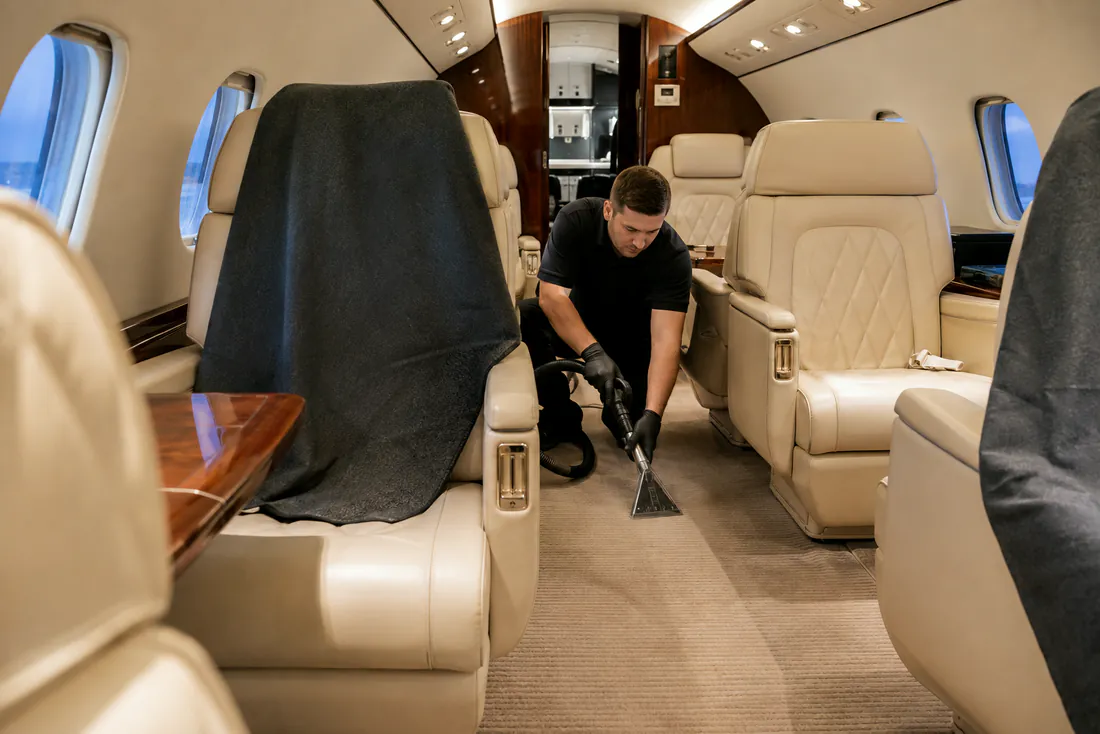
A working aircraft accumulates wear in predictable places: seat bolsters and armrest edges, the carpet runner down the aisle, the threshold at the entry, cup holders, table edges, the galley rail, and every latch and handle in the lavatory. A cabin detail that skips those areas is just tidying.
We work zone by zone with low-moisture methods so nothing is saturated — carpet is extracted rather than soaked, sidewalls and headliner are treated as the delicate materials they are, and veneer and solid surfaces are cleaned with products chosen for the finish rather than for speed.
Where a surface has gone past cleaning — cracked leather, a worn seam, a dyed area that has faded unevenly — we flag it and quote the restoration separately, so you can decide whether it belongs in this visit or the next one.
02Method
How the work is run.
- 01
Cabin walkthrough
We walk the cabin with you or your crew, agree what is in scope, and record anything already damaged so there is no ambiguity later.
- 02
Remove & stage
Loose items, catering, linens and crew equipment are handled with you. Nothing belonging to the operator is moved without agreement.
- 03
Top-down dry pass
Headliner, sidewalls, valances, shades and window frames first, so anything released falls to surfaces still to be cleaned.
- 04
Seating & soft trim
Leather cleaned and conditioned, fabric treated, seams and bolsters worked by hand, seat tracks and pedestals detailed.
- 05
Floor & hard surfaces
Low-moisture carpet extraction, thresholds and edges by hand, then veneer, stone and stainless through the galley and lavatory.
- 06
High-touch finish & review
Every touched surface treated, glass and mirrors finished, then a structured walkthrough against the agreed scope before handback.
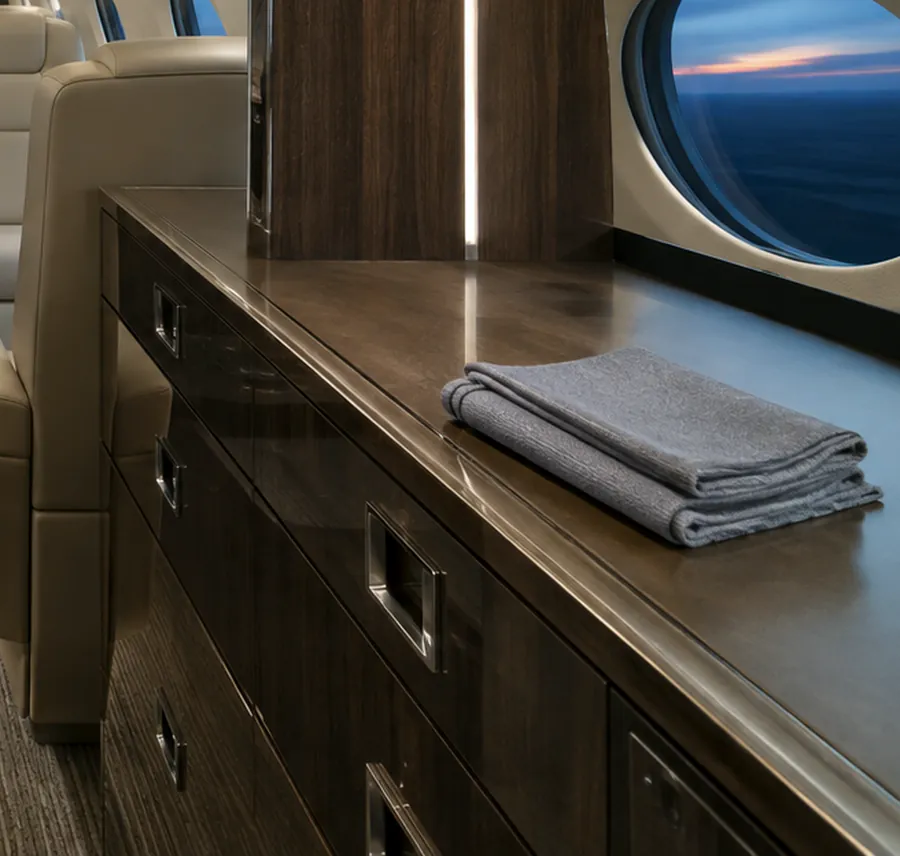
Galley and service areas
Stainless, veneer and solid surface all take heavy handling and all show it differently. Water spotting on stainless, edge wear on veneer and dulling on solid surfaces each need a different approach to come back properly.
- Stainless finished with the grain, not against it
- Veneer cleaned with finish-appropriate products
- Drawer boxes, rails and latches cleaned out
- Coffee, ice and waste areas fully reset
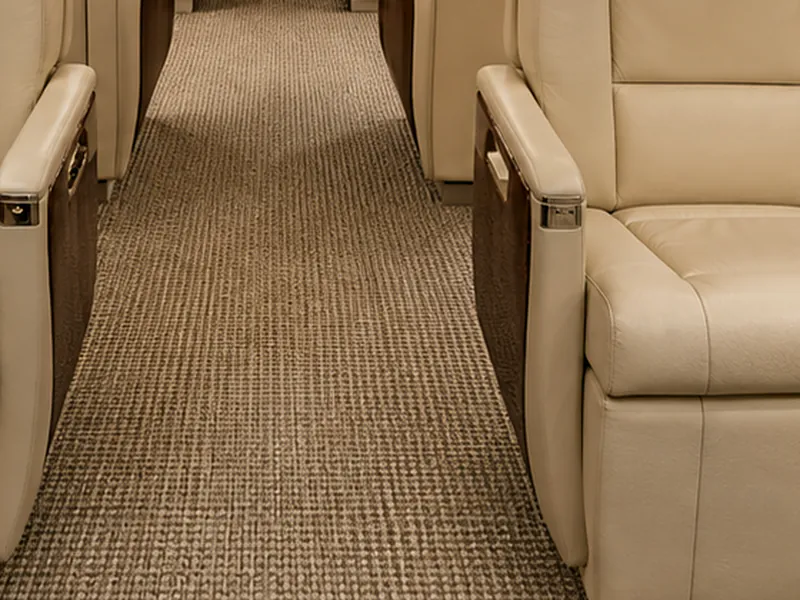
Floor, runners and thresholds
The aisle runner takes every footfall in the aircraft and the entry threshold takes them all twice. Low-moisture extraction lifts embedded soiling without pushing water into the underfloor.
- Low-moisture extraction across carpet and runners
- Edges, tracks and thresholds detailed by hand
- Pedestals, kick panels and seat bases included
- Drying managed so the aircraft is usable on handback
Where we stop
A cabin reset, not a refurbishment.
Interior detailing restores what is there. When a material has failed rather than soiled, that is restoration or refurbishment work and it gets quoted honestly.
- No removal of seats, panels, trim or floor structure
- No cleaning of avionics, instrument faces or cockpit panels beyond an agreed limit
- Failed leather, split seams and worn veneer are quoted as restoration
- Any odor with a suspected mechanical source is referred to maintenance
05Questions
Before you book.
Yes — tables, armrests, latches, handles, controls, cup holders, lavatory fixtures and entry thresholds are treated as part of every interior scope, using products chosen to be compatible with the cabin's finishes.
Low-moisture extraction is chosen specifically to avoid that. Drying is planned into the service window, and we tell you honestly at scoping if the window you have is too short for the carpet work you want.
To an agreed limit, and normally with crew present. We do not clean instrument faces, avionics, switch panels or displays unless your operator specifically instructs it in writing.
We address odors that come from the cabin itself — soiling, spills, soft trim. If the source appears mechanical, environmental or beyond the cabin materials, we tell you and refer it rather than masking it.
Related capabilities.
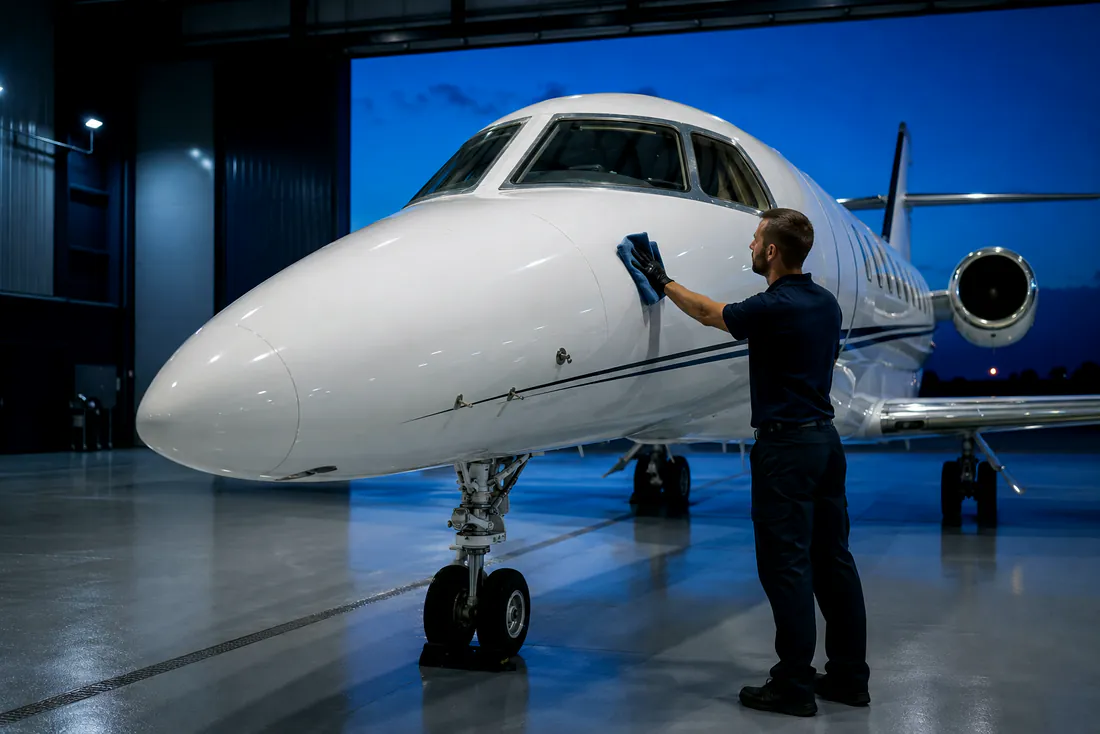
01
Exterior detailing
Controlled, low-moisture exterior cleaning that respects seals, static ports, composites and placards.
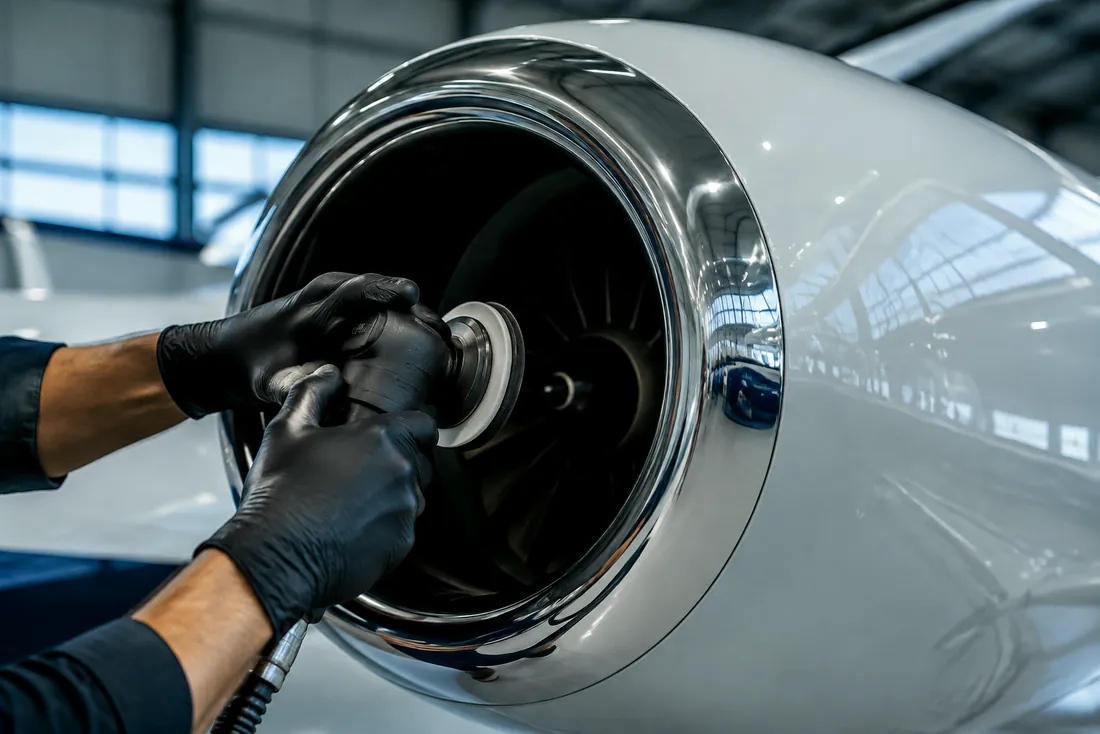
03
Brightwork & metal polishing
Staged oxidation correction on leading edges, inlet lips and nacelle rings.
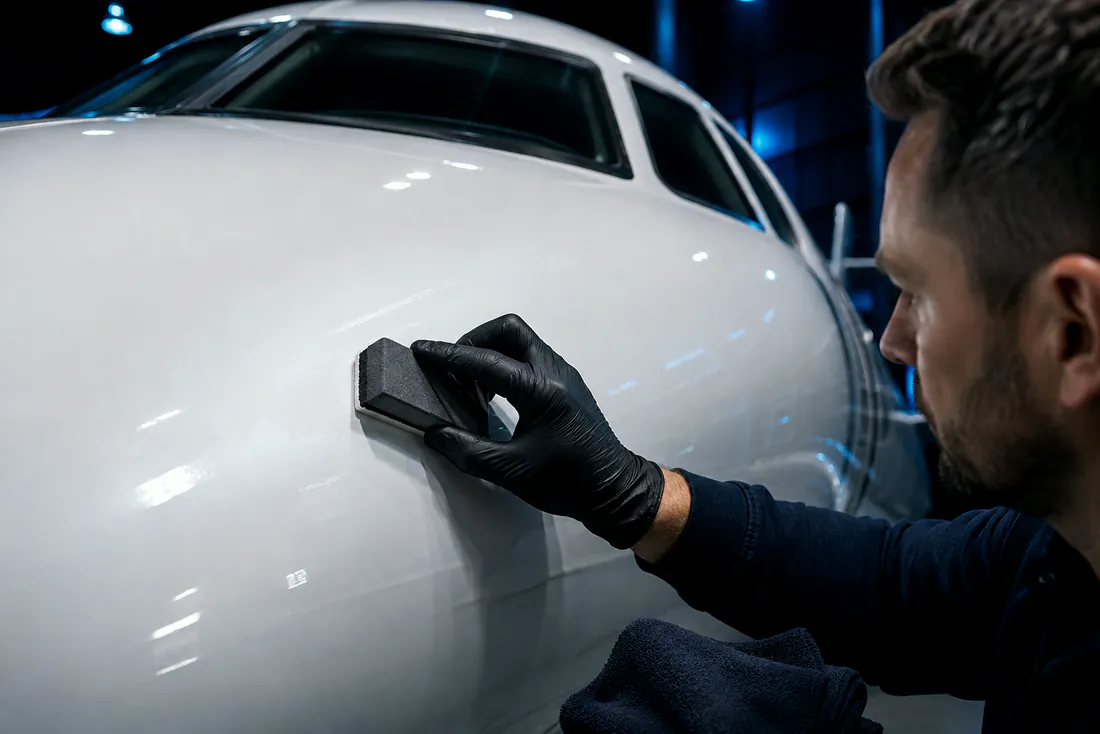
04
Paint revitalization & ceramic
Gloss recovery within the limits of the paint film, then durable protection to hold the result.
Next step
Ready to scope this aircraft?
Send the tail type, the field and the ground time you hold. We will come back with what is realistic and what it involves.