Priority 01
What a passenger touches
Entry threshold, seating, tables, armrests, galley face, lavatory. The highest visible return per minute in any short window, without exception.

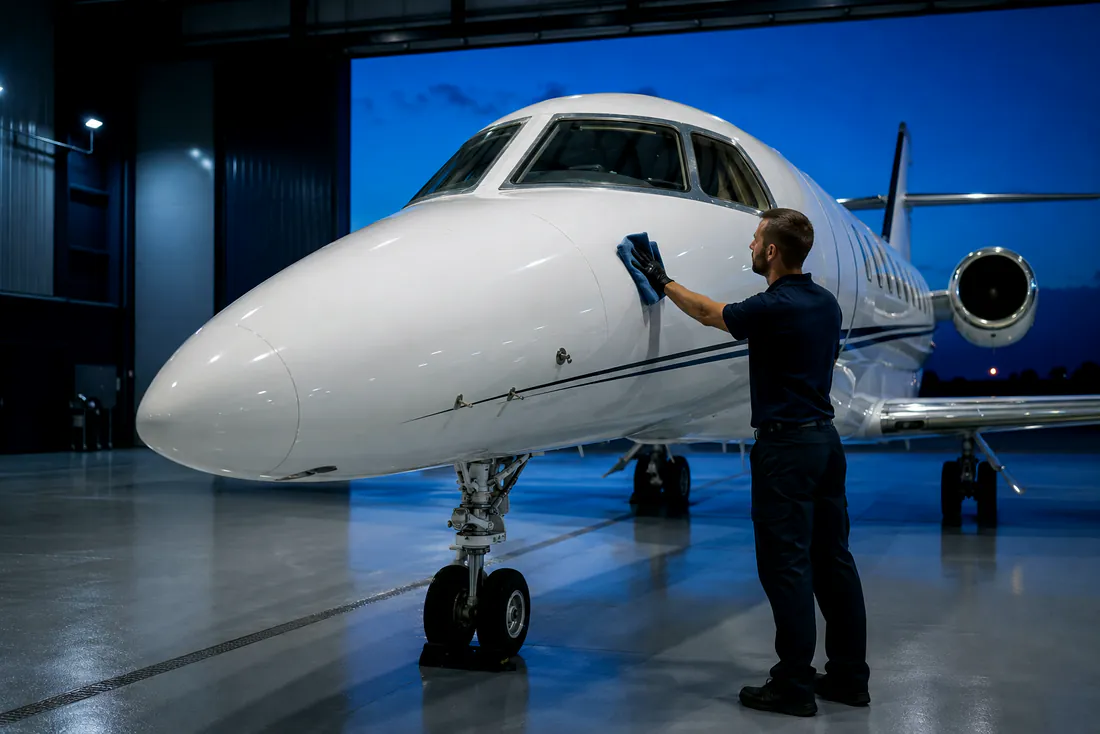
PAC TurnReady
Focused presentation support when the schedule moves — prioritised by what the ground time you actually hold will genuinely allow.
Short-window support
01Overview
Everything about short-notice work comes down to one number: how long the aircraft is genuinely available. Get that right and the rest is straightforward.
Schedules move. A trip gets added, a principal joins unexpectedly, an aircraft arrives off a long leg looking like it flew a long leg, or a showing is brought forward. None of that is unusual and none of it should require a compromise on how the aircraft presents.
What it does require is honesty about scope. In a genuinely short window, the right answer is a focused scope that delivers the most visible improvement per hour — cabin presentation, targeted exterior work, the areas a passenger will actually encounter — rather than an ambitious scope delivered badly.
We will tell you what fits before we dispatch, not after. If your window will not carry what you are asking for, you will hear that from us while there is still time to change either the window or the ask.
02Priorities
When time is the binding constraint, sequence is the whole strategy. This is the order we work in and the reasoning behind it.
Priority 01
Entry threshold, seating, tables, armrests, galley face, lavatory. The highest visible return per minute in any short window, without exception.
Priority 02
The forward fuselage, entry area, airstair and the side of the aircraft they approach from. First impression is formed before the door.
Priority 03
Belly film, exhaust staining and windows. Disproportionately visible in images and in bright light, disproportionately quick to improve.
Deferred
Correction, leather restoration, coatings and anything needing cure time. Attempting these in a short window produces a worse result than not attempting them.
03Coordination
Short-window work follows the same coordination path as any other visit. The steps do not get skipped — they get tighter.
Step 01 / 06
You send the aircraft, the airport and the window. Nothing else is needed to start.
Step 02 / 06
We review condition, agree what is realistic in the time available, and write the scope down.
Step 03 / 06
We deal with the FBO, hangar tenant or flight department so your crew does not have to.
Step 04 / 06
Specialist crews work the agreed scope with aircraft-appropriate methods and products.
Step 05 / 06
A structured walkaround against the written scope before anyone calls the work finished.
Step 06 / 06
The aircraft is returned to the line with a completion record and anything we noticed along the way.
04Questions
No, and we would rather say so plainly than publish a number we cannot hold. Availability depends on crew commitments, the field, facility access and what else is running that day. We tell you what we can actually do for your window when you ask.
More than most people expect, if the priorities are set correctly. Interior presentation and targeted exterior work deliver the most visible change per hour. Correction, restoration and anything requiring cure time do not compress.
Not in the maintenance sense. We support appearance needs around schedule disruption and unplanned passenger changes. Anything affecting airworthiness or dispatch is a maintenance matter and goes to your provider.
Scope, access and timing all affect a quote and we are straightforward about that when we scope the work. What we do not do is quote for something the window cannot actually accommodate.
Next step
Send the field, the ground time and what matters most. You will get an honest answer about what is achievable before anyone commits.
Ramp dispatch
Your reference is received. The PAC operations team will review the aircraft, location and service window before confirming scope.