Paint revitalization & ceramic
Paint revitalization
& ceramic protection.
Gloss recovery within the limits of the paint film, followed by protection chosen for where the aircraft actually operates — not for what sounds most impressive.
01Overview
The film thickness
decides the job.
Aircraft paint is a finite, certified system. How much correction it can take is a property of the paint — not a matter of ambition.
A tired-looking aircraft is usually not a repaint candidate. Oxidation, wash marring, airborne fallout and water etching sit in the top few microns of clear or single-stage finish, and recovering them transforms how the aircraft reads without touching the paint's integrity.
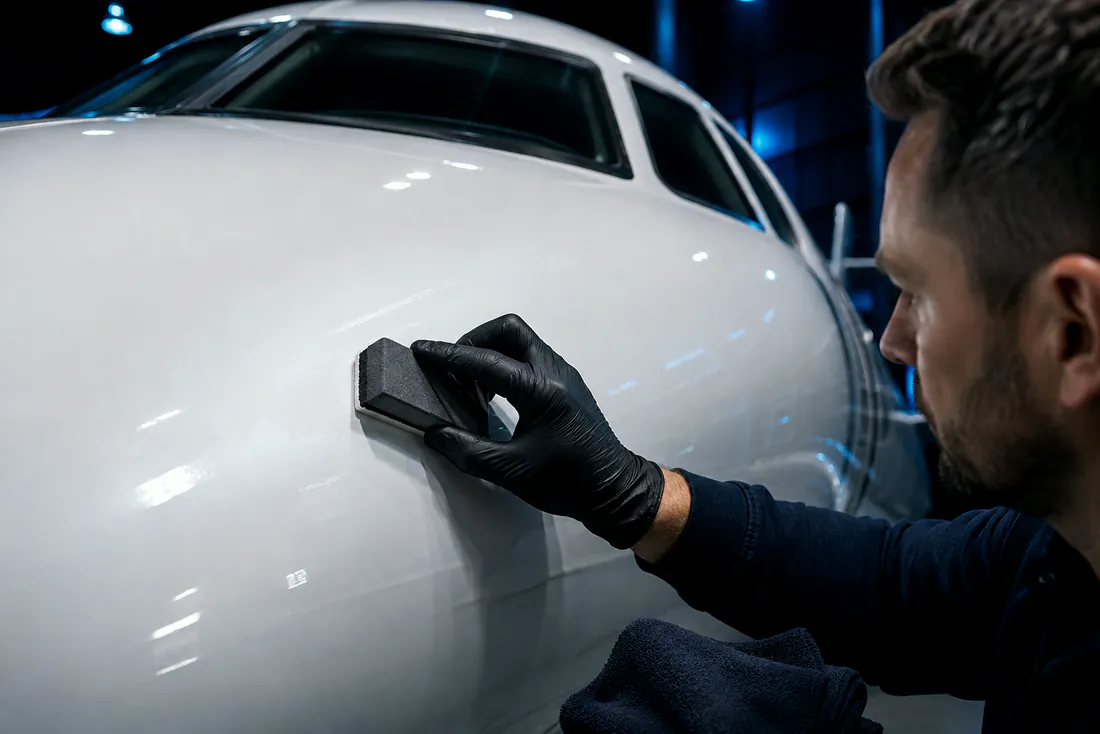
Our approach starts with assessment: the film's age and history, existing defects, previous correction, repaint sections and any areas already thin. Correction is then staged from the least aggressive method that will work, panel by panel, with the result checked under proper lighting rather than hangar ambience.
Protection is the second half of the job and the half that determines how long the first half lasts. Ceramic and sealant systems each have a real trade-off in durability, maintenance behaviour and cost, and we talk through those honestly before a product is chosen for your aircraft.
02Method
How the work is run.
- 01
Assess the paint system
Age, history, previous correction, repaint sections and areas already thin. If the film cannot safely support correction, we say so before quoting it.
- 02
Decontaminate
Surface contamination is removed first, so correction works on the paint rather than on what has bonded to it.
- 03
Test section
A defined test area establishes what combination actually delivers the result on this specific paint, with the least removal.
- 04
Stage the correction
Panel by panel with the proven combination, inspected under correct lighting between stages rather than at the end.
- 05
Refine and finish
A finishing pass to remove any correction haze and bring the surface to its final clarity before protection goes on.
- 06
Protect and brief
The chosen protection is applied, then we brief your crew or wash provider on what maintenance routine will actually preserve it.
What correction can and cannot recover
Correction removes defects that sit within the top layer of the finish. It cannot restore paint that has failed, rebuild film that is already thin, or make a repaint section match a twenty-year-old original.
- Recovers oxidation, marring, fallout and light etching
- Cannot recover failed, cracked or delaminating paint
- Cannot add film thickness back to a thin panel
- Repaint sections are assessed and discussed separately
Choosing protection honestly
Ceramic coatings genuinely help — they make maintenance washing easier, hold gloss longer and resist fallout. They are not permanent, they are not a substitute for washing, and they will not stop physical damage.
- Product selected for the operating environment
- Realistic durability explained before application
- Maintenance routine briefed to your crew or wash provider
- Recurring maintenance available under PAC FleetReady
Where we stop
Correction has a floor, and we work above it.
The paint film is a finite resource. We will decline correction work that a particular aircraft's paint cannot safely support, and explain why.
- No correction where the film cannot safely support it
- No repainting, refinishing or touch-up work
- Corrosion, lifting or delamination is reported and referred
- Test sections are used before committing to a full-airframe approach
05Questions
Before you book.
It will make it look considerably better, sometimes dramatically. It will not make a worn paint system into a new one. We show you a completed test section before you commit to the whole airframe, so the expectation is set by the actual aircraft.
That depends on the product, the environment, how the aircraft is stored and how it is washed between visits. We give you the realistic expectation for your specific situation rather than a headline duration.
No. A coating makes washing more effective and less damaging — it does not replace it. We brief your crew or wash provider on a routine that preserves the coating instead of stripping it.
Yes, and sometimes that is the right call — a badly weathered upper surface with sound sides, for example. We will tell you if partial correction will look obviously partial once it is done.
Related capabilities.
01
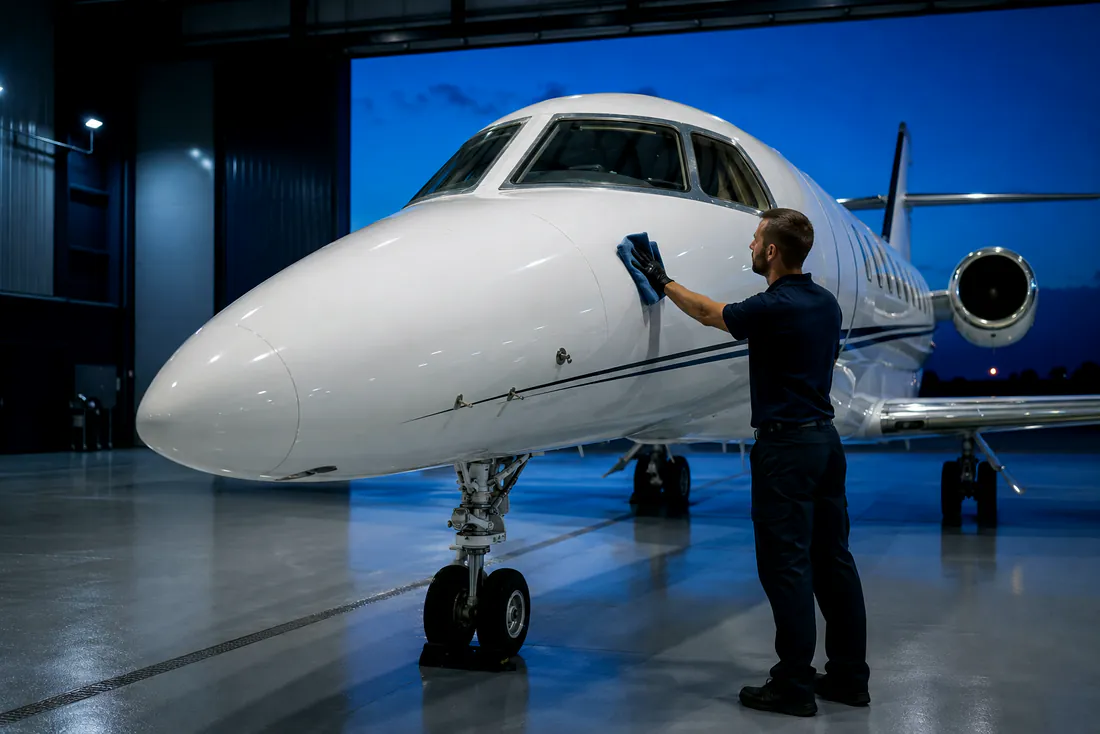
Exterior detailing
Controlled, low-moisture exterior cleaning that respects seals, static ports, composites and placards.
02
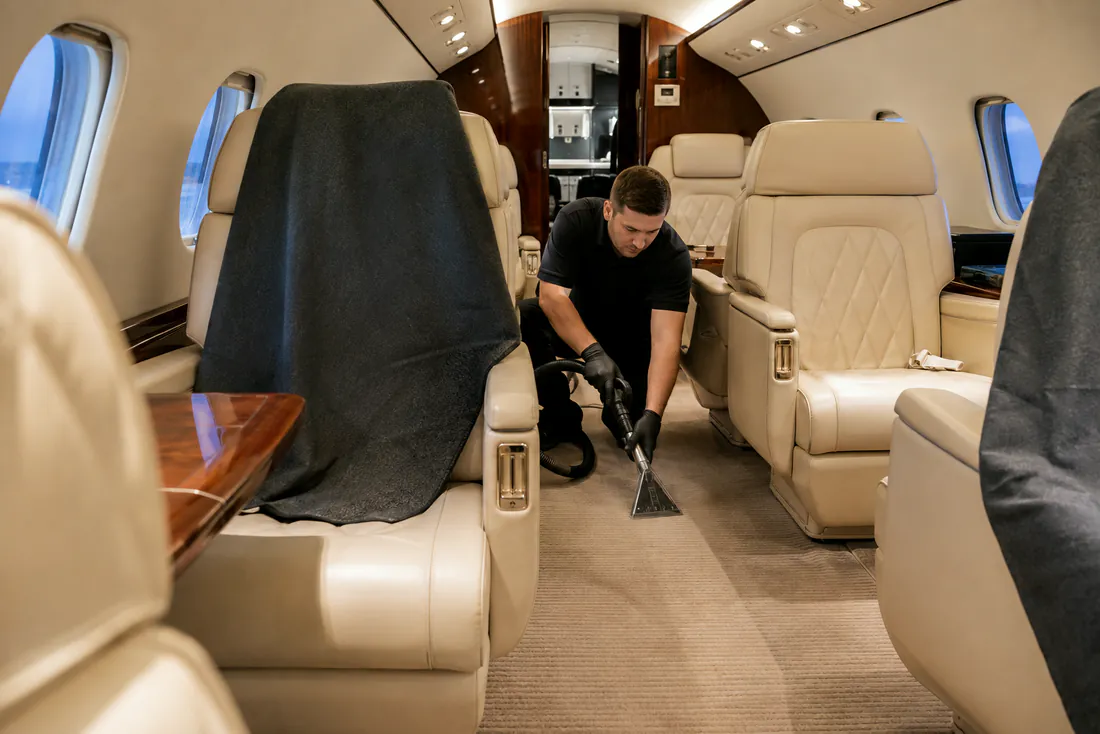
Interior detailing
A full cabin reset — seating, carpet, galley, lavatory and every high-touch surface in between.
03
Brightwork & metal polishing
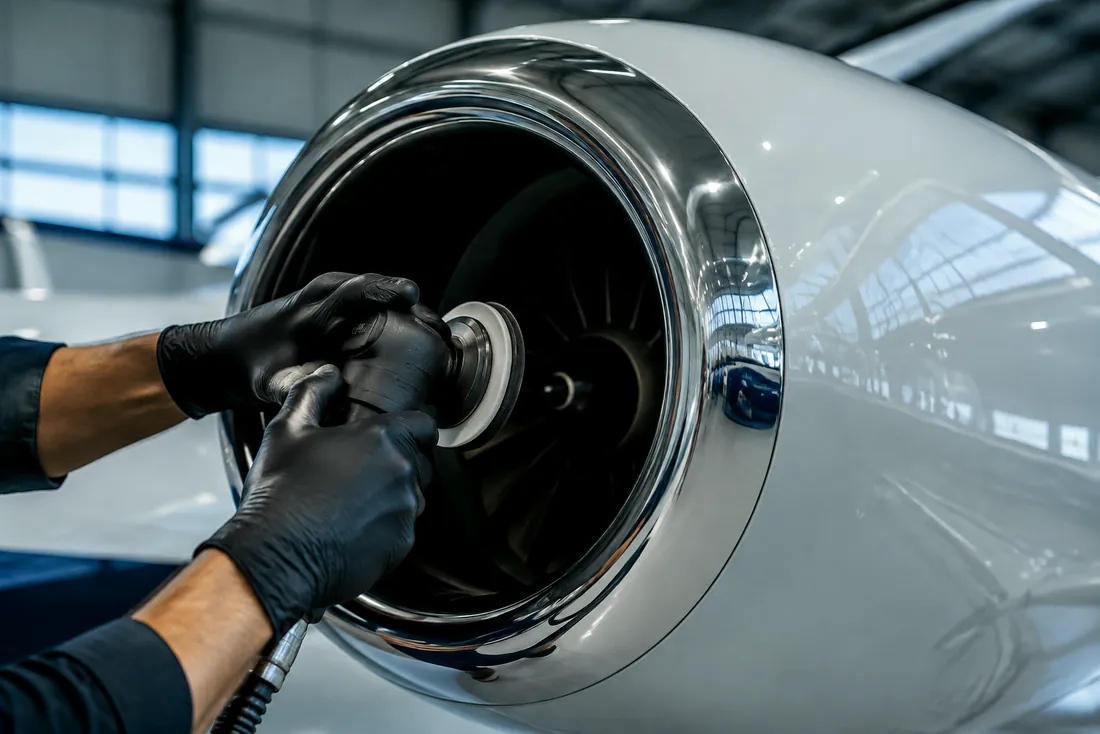
Staged oxidation correction on leading edges, inlet lips and nacelle rings.
Next step
Ready to scope this aircraft?
Send the tail type, the field and the ground time you hold. We will come back with what is realistic and what it involves.